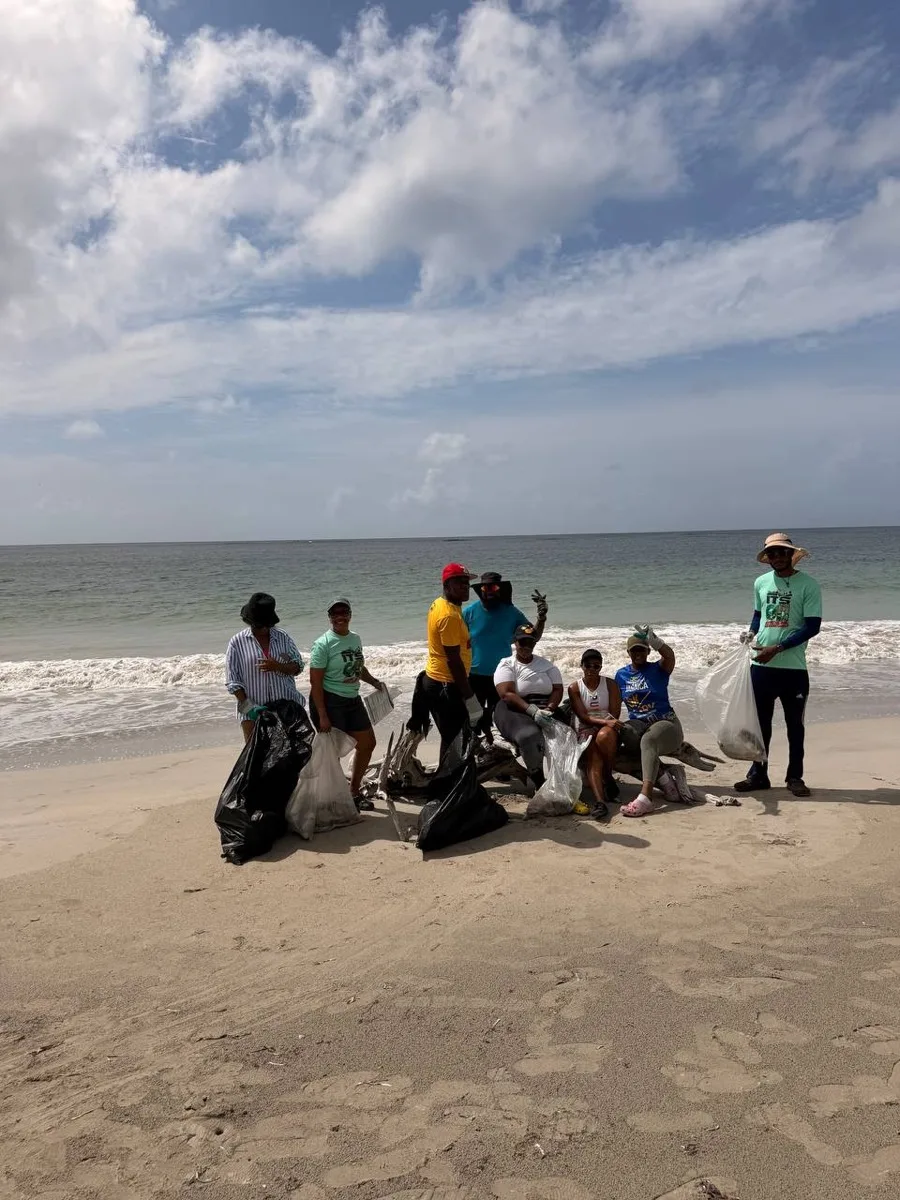
At 6:36 on a Saturday morning, four vehicles were about to turn an ordinary drive through eastern Jamaica into a very different kind of Lifestyle Hikers adventure.
This time, there was no mountain summit waiting for us.
No waterfall at the end of the trail.
Our destination was Rocky Point in St. Thomas, and our mission was simple: help clean Jamaica’s coastline as part of International Coastal Cleanup Day 2026.
We spend a lot of time exploring Jamaica. On this trip, we had the chance to give something back.
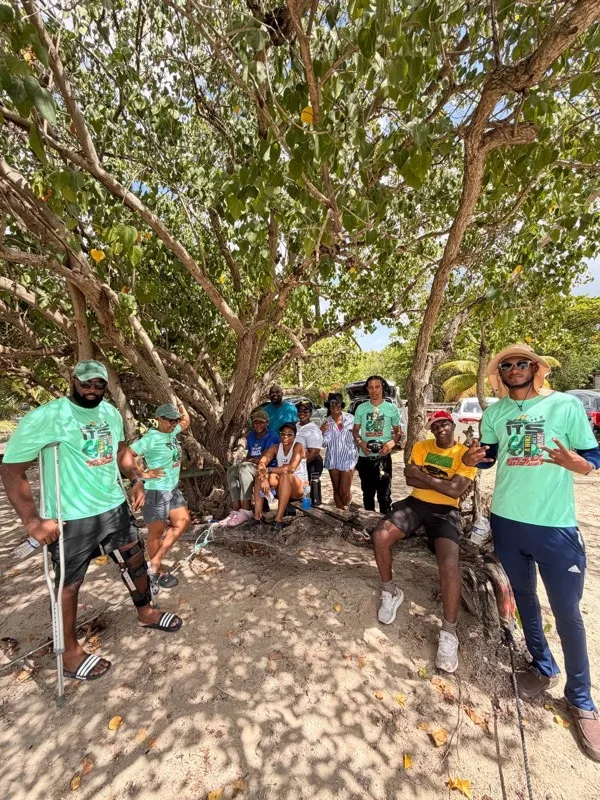
The Journey to Rocky Point
We left Harbour View at approximately 6:36 a.m., heading east into St. Thomas.
Our first stop was in Albion, where we waited for a few friends to join us. Before long, we had a convoy of four vehicles moving together.
Instead of taking the more familiar turnoff near Golden Grove, we turned off a little earlier and took the scenic route into Rocky Point.
That route gave us another view of St. Thomas: quiet communities, rural roads and stretches of coastline that many people simply pass by.
By approximately 9:30 a.m., we had reached Rocky Point.
And that is where the real work began.
More Than Just Another Beach
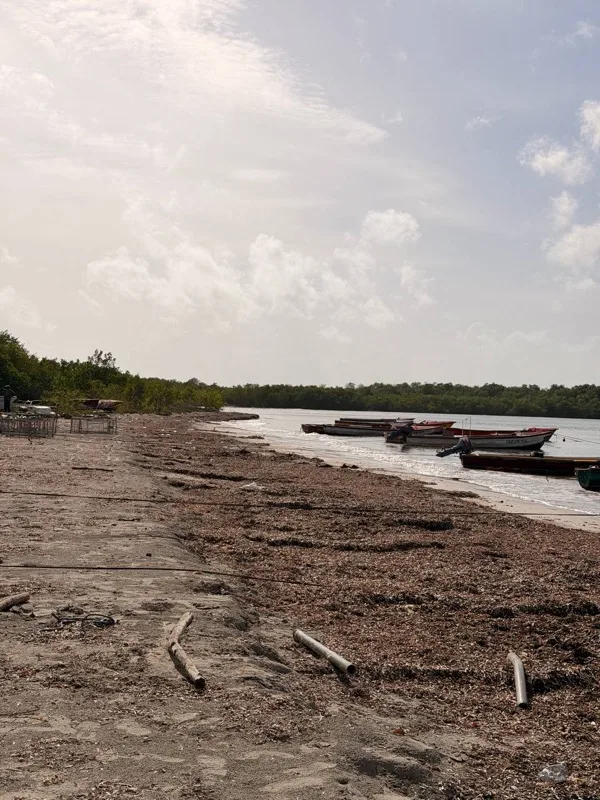
Rocky Point Beach is located in the Morant Point area of St. Thomas and is recognised as both a public bathing beach and a fishing beach.
According to Jamaica’s National Environment and Planning Agency, the beach stretches for roughly one kilometre along the coast. The eastern section has traditionally been associated with bathing, while fishing activity is concentrated farther west.
That immediately makes Rocky Point more than just another scenic coastline.
It is a working beach.
Fishing is part of the community.
People live, work and spend time along this coast.
The area also features coconut trees, sea grape, seaside mahoe and mangrove vegetation along the access route. NEPA also notes remnants of an old concrete structure along the shoreline, where the sea has gradually reclaimed part of the coast.
It is a small detail, but it is a reminder that coastlines are constantly changing.
International Coastal Cleanup Day
September 19, 2026, marked International Coastal Cleanup Day in Jamaica.
This year’s local theme was:
“Sea the Change: Away is a Place.”
The message is simple but powerful.
When we throw something “away,” it does not disappear.
It ends up somewhere.
Sometimes that somewhere is a beach.
Sometimes it is a mangrove.
Sometimes it is the sea.
Jamaica’s coastal cleanup activities involve volunteers removing plastics, Styrofoam and other forms of waste from beaches, shorelines and mangrove areas in an effort to protect marine environments.
That message became very real once we started cleaning.
Then the Bags Started Filling
Gloves went on.
Bags came out.
And we started walking.
It did not take long before we began finding garbage along the coastline.
Bottles.
Plastic.
Containers.
And a range of other waste that had ended up along the beach.
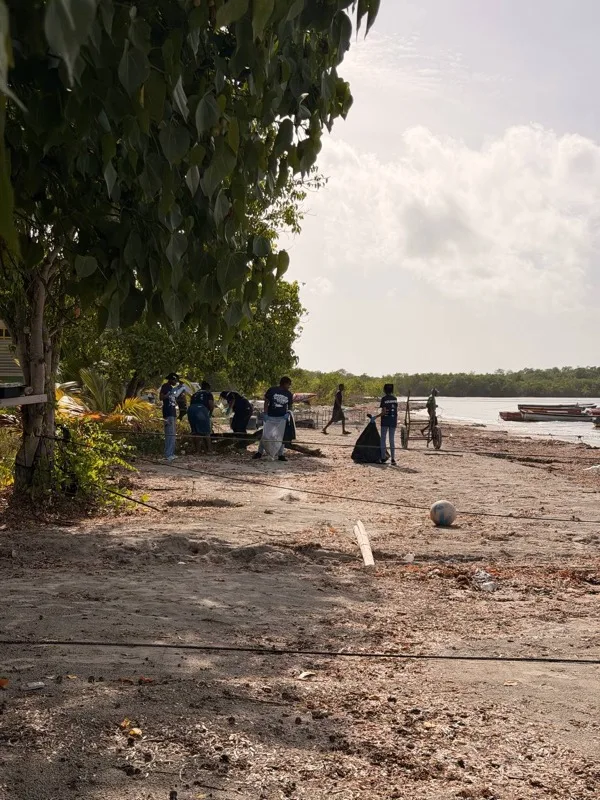
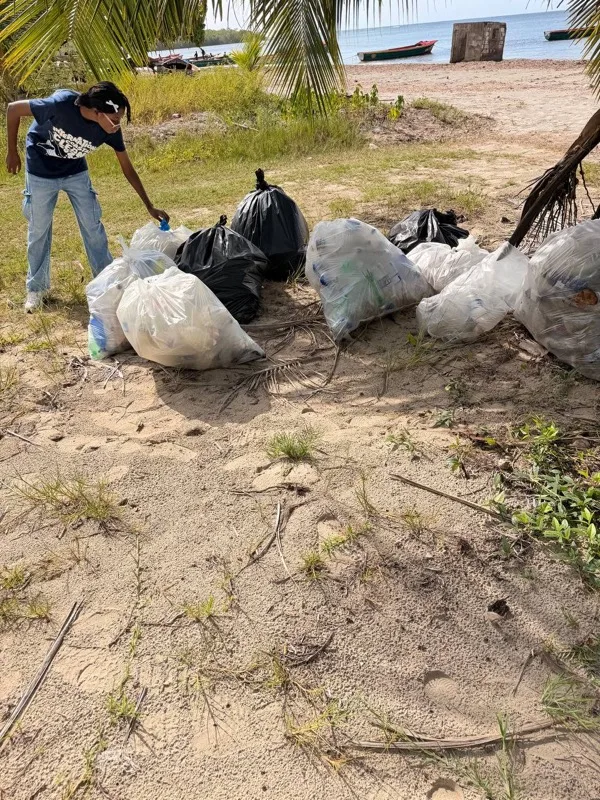
The amount accumulated quickly.
But this cleanup was not only about filling garbage bags.
We also had to record what we collected.
That part may not look as exciting on camera, but it matters.
Documenting what is collected helps build a clearer picture of the types of waste reaching beaches and coastlines.
It turns a cleanup from a simple one-day activity into useful environmental information.
Why Cleaning Rocky Point Matters
Rocky Point’s identity as both a bathing and fishing beach makes protecting the area even more important.
Beaches in Jamaica are not just places for recreation.
They support fishing, tourism, vending, community activity and livelihoods connected directly to the sea.
At Rocky Point, fishing infrastructure and fishermen’s facilities are part of the beach environment itself.
So when waste reaches this coastline, it is not affecting some distant or disconnected place.
It is affecting somewhere people work.
Somewhere people fish.
Somewhere people swim.
Somewhere people live.
St. Thomas and Its Relationship With the Coast
St. Thomas is one of Jamaica’s most historically significant parishes.
It stretches from the Blue Mountains down to the southeastern coastline and covers approximately 742 square kilometres.
The parish has a long history stretching back to Taíno settlement, Spanish occupation and later British colonial rule.
It is also closely associated with the Morant Bay events of 1865, one of the most important moments in Jamaica’s political and social history.
But beyond those major historical events, St. Thomas also has a deep relationship with agriculture, fishing and coastal communities.
Rocky Point represents that quieter side of the parish.
A place where the sea is not just scenery.
It is part of everyday life.
About an Hour and a Half Later
We worked until roughly 11:00 a.m.
By then, we had collected a substantial amount of garbage.
The bags were filled.
The collection information was recorded.
And Rocky Point looked noticeably different from when we first arrived.
Then the four-vehicle convoy began the journey home.
The cleanup itself lasted only a relatively small part of the day.
But the experience stayed with us.
The Lifestyle Hikers 3Es
At Lifestyle Hikers, we believe every adventure should deliver our 3Es: Entertaining, Engaging and Educational.
This trip delivered all three in a different way.
It was Entertaining because it was still an adventure. Four vehicles, a road trip through eastern Jamaica and a scenic route into a part of St. Thomas many people may never have explored.
It was Educational because we learned more about Rocky Point, its fishing community, its coastline and the purpose behind International Coastal Cleanup.
And it was Engaging because we were not simply watching a problem from a distance.
We were doing something about it.
Exploring Jamaica Also Means Protecting Jamaica
Most Lifestyle Hikers adventures are about discovering somewhere.
A mountain.
A river.
A waterfall.
A trail.
Rocky Point was different.
This adventure was about leaving somewhere better than we found it.
Jamaica’s beaches are part of our environmental, cultural and economic heritage. They support recreation, fishing, tourism and communities across the island.
Enjoying them also comes with responsibility.
Four vehicles left Harbour View that morning carrying members of Lifestyle Hikers.
We came back with a very different kind of hiking story.
No summit.
No difficult trail.
No kilometres to brag about.
Just a coastline that looked a little cleaner than when we arrived.
We hike Jamaica. Sometimes, we clean it too.