Most people associate Hellshire with beaches, seafood and busy weekend gatherings.
On Saturday, July 25, 2026, Lifestyle Hikers experienced a completely different side of this well-known section of Portmore, St. Catherine.
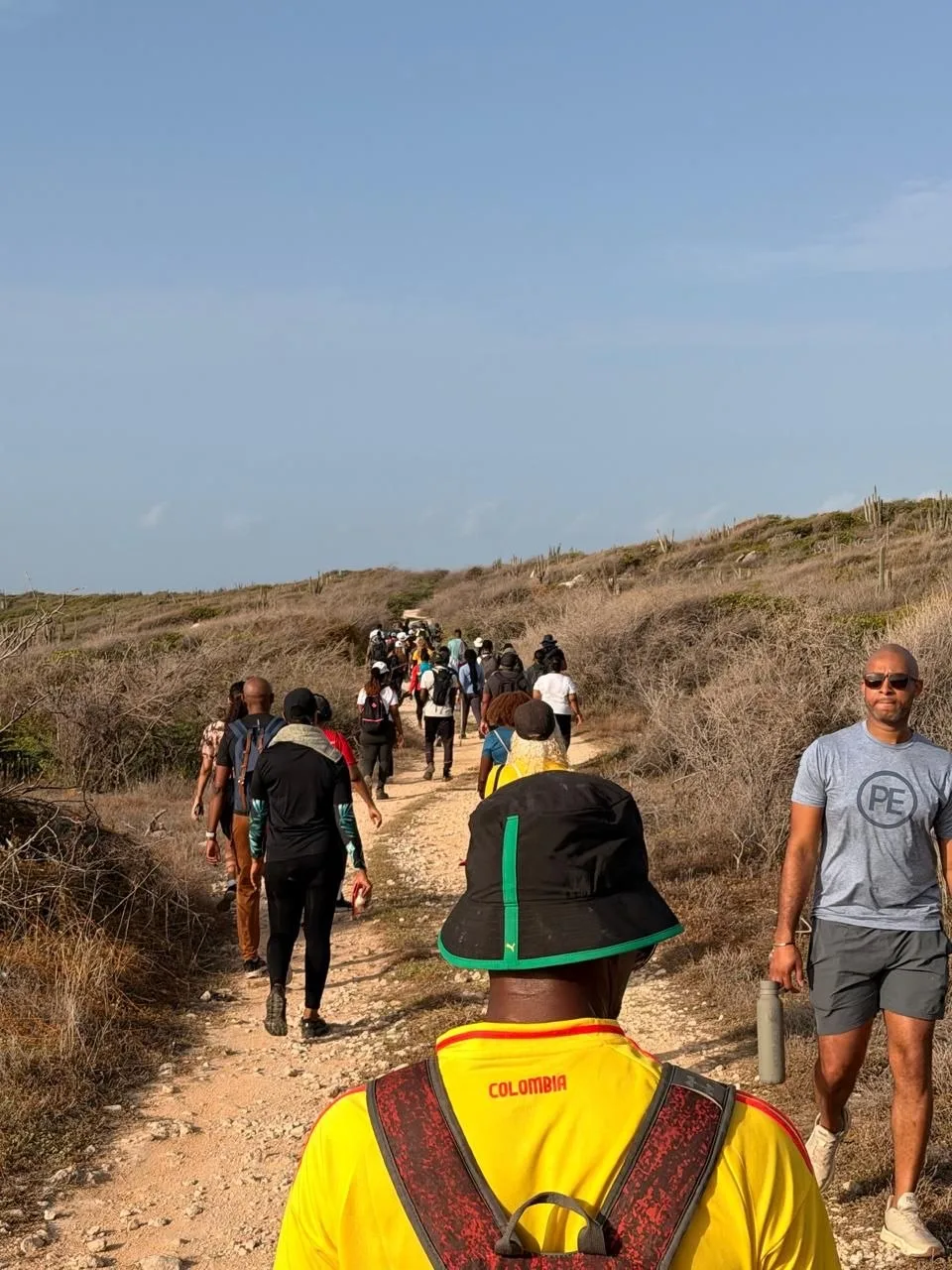
What began as a short planned walk turned into an approximately five-mile hiking adventure through Sand Hills, swampy wetlands, mangrove forests and the Hellshire coastline. Along the way, we almost stepped on a crocodile, crossed muddy sections on wooden pallets, passed through drifts of Sargassum, reached the abandoned site locally known as the old shrimp factory, and finished the route near the historic Two Sisters Cave area.
This was not just another hike. It was an encounter with Hellshire’s natural environment, its cultural history and a side of Portmore that most visitors never see.
Explore upcoming Lifestyle Hikers experiences →
Beginning the Hike at Sand Hills
We drove from the Portmore toll area to Sand Hills in Hellshire, where we parked and prepared for the journey. Before setting off, the group gathered for our usual prayer, a moment to focus, acknowledge the terrain ahead and start the experience together.
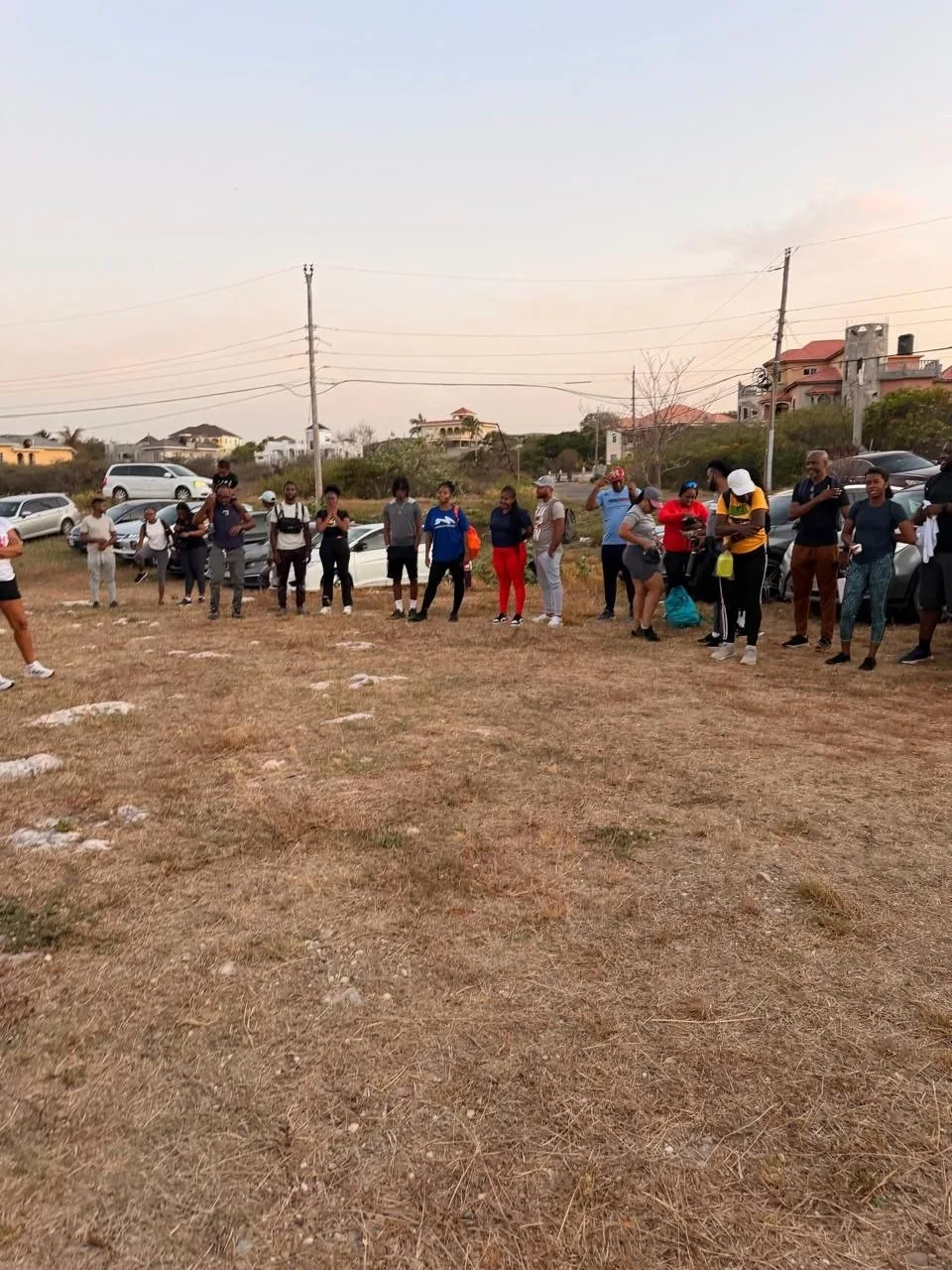
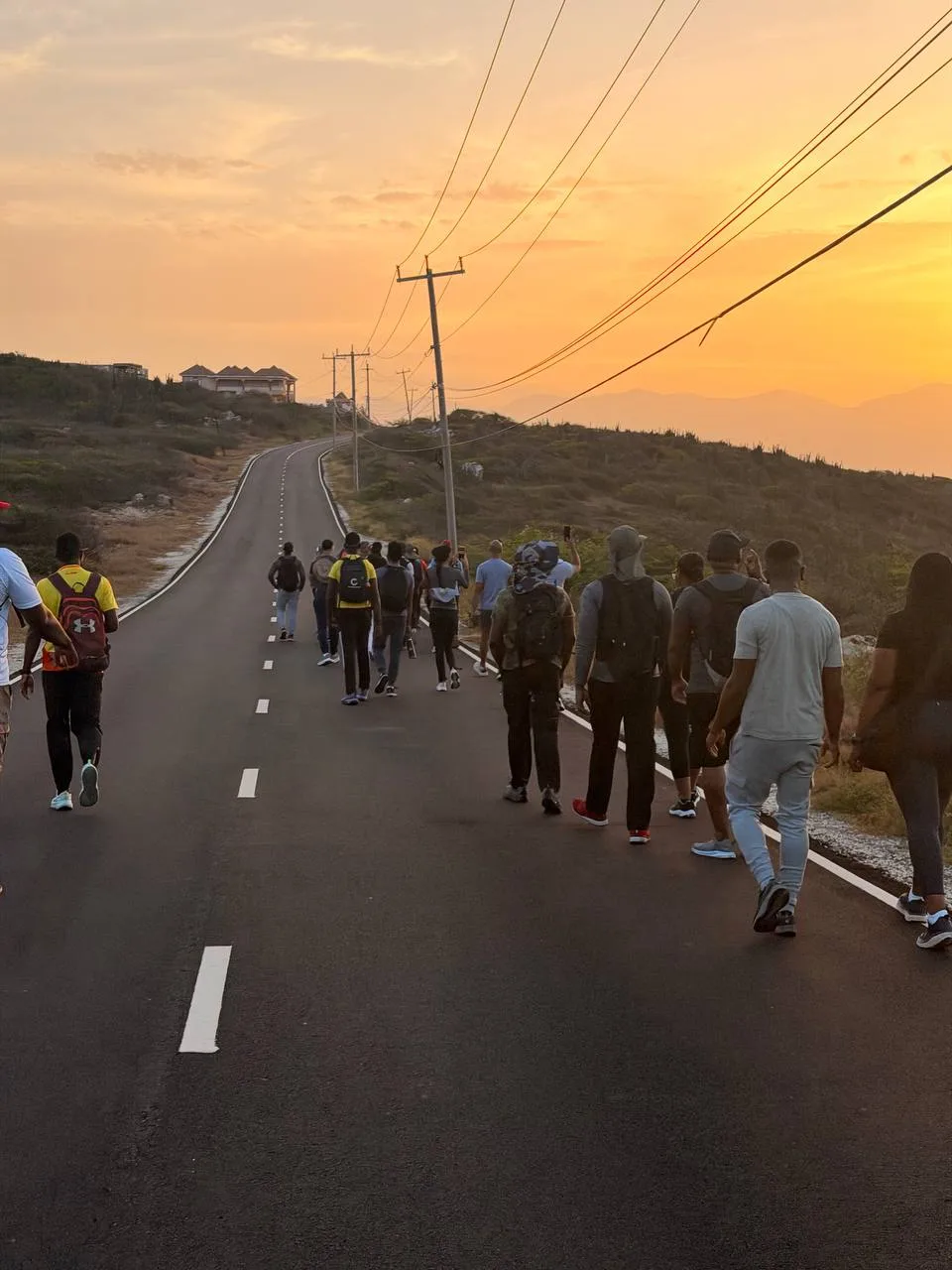
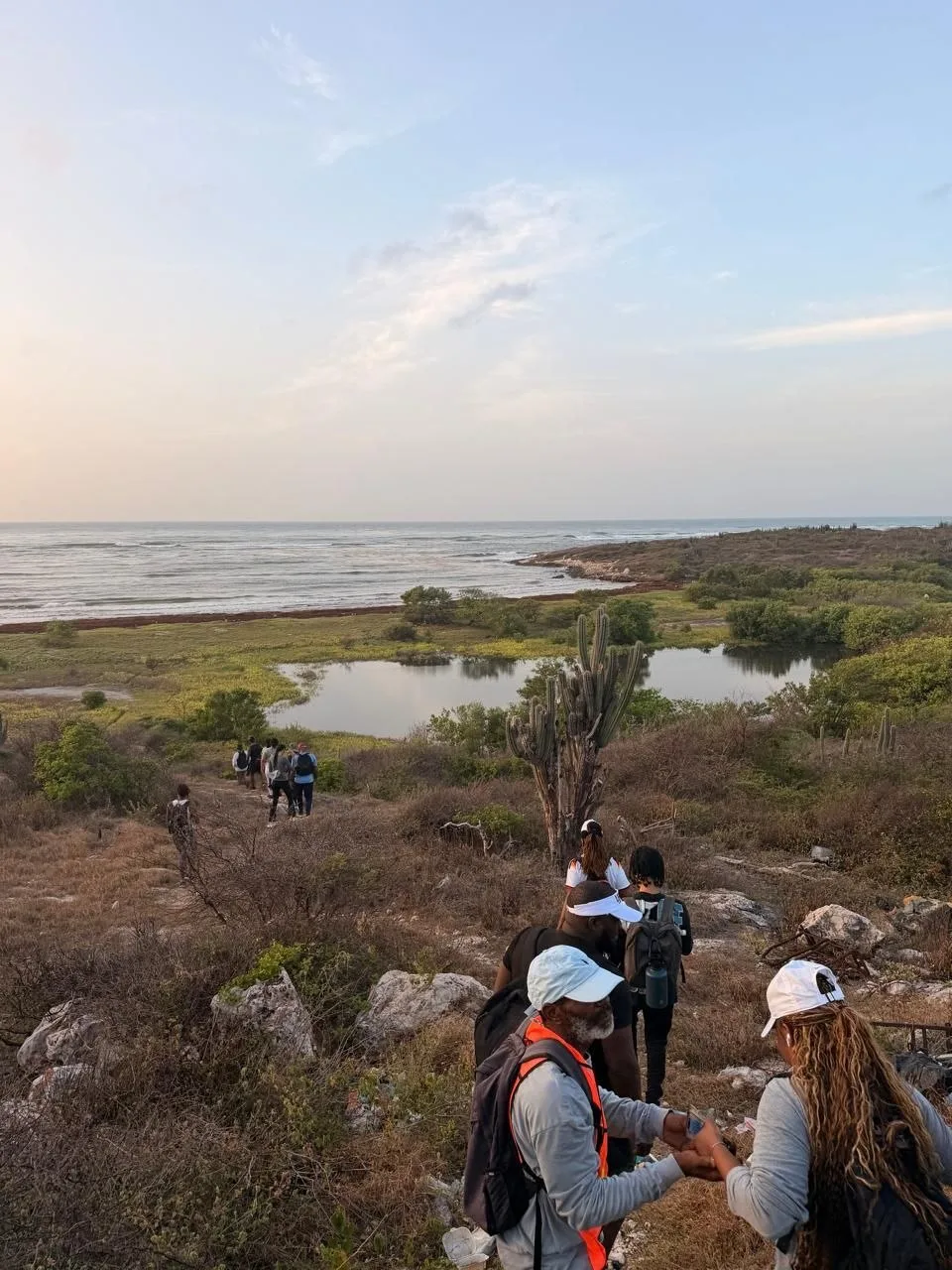
From Sand Hills, we headed downhill toward the wetland.
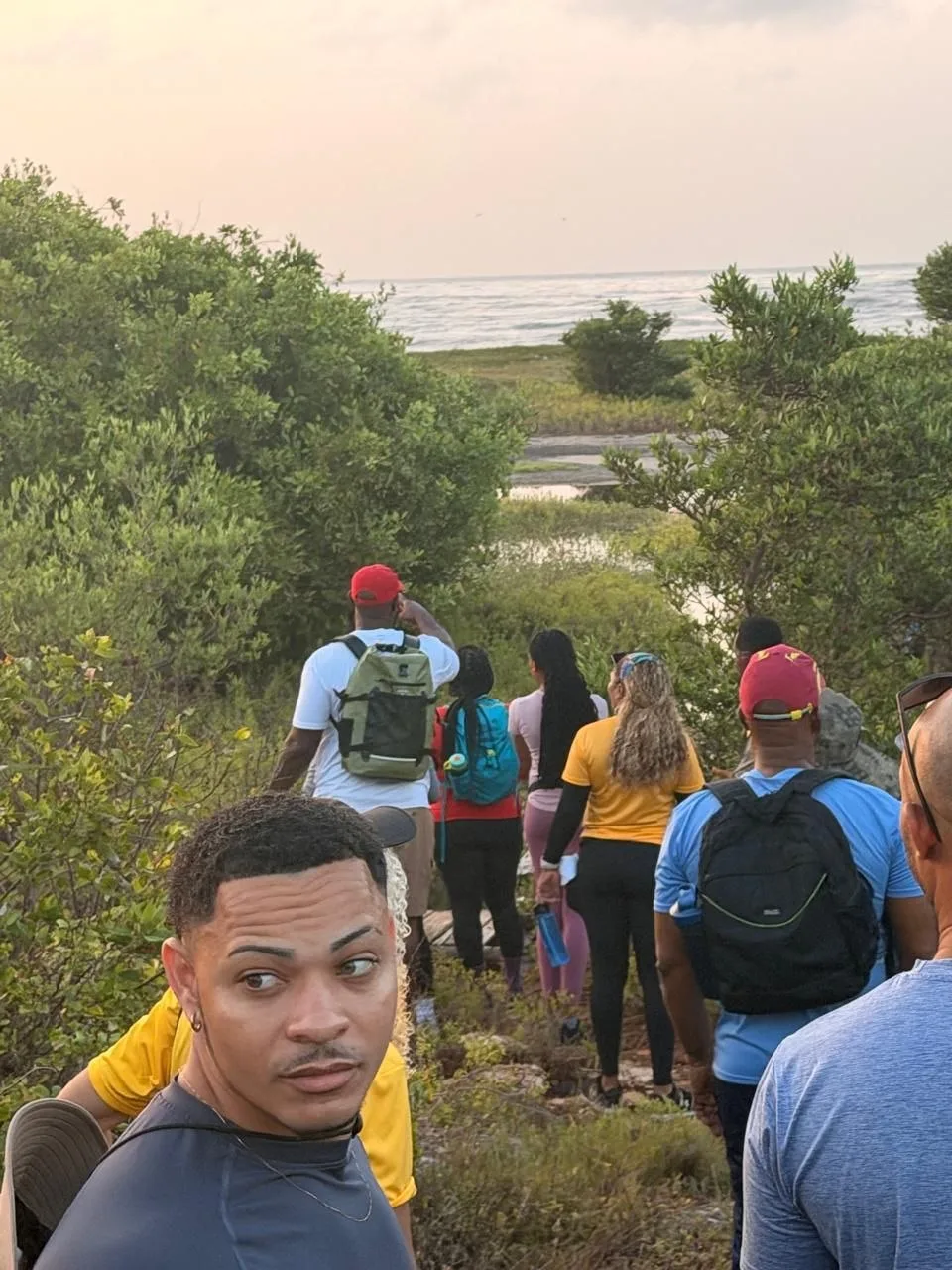
Published information specifically about the Sand Hills community is limited, but Sand Hills sits within the wider Hellshire landscape on the southern side of Portmore, St. Catherine. Portmore is generally divided between its flatter northern plains and the limestone Hellshire Hills to the south. The broader area’s history stretches back centuries, with documented evidence of Taino activity in Hellshire and later Spanish haciendas established in the region.
We were entering a landscape shaped by far more than modern tourism.
Crossing the Hellshire Swamp
The first stretch of the hike carried us into swampy terrain surrounded by mangroves. This was not a developed trail with paved paths, handrails or signage. We navigated mud, shallow water and unstable ground, often relying on old wooden pallets that had been laid across the wettest sections as makeshift bridges. Every step required balance and concentration.
Then, shortly after entering the wetland, the hike changed completely.
We almost stepped on a crocodile.
It was resting quietly in the swamp, easy to overlook until we were nearly on top of it. Once we recognized what was in front of us, we stopped, gave it space and changed our route.
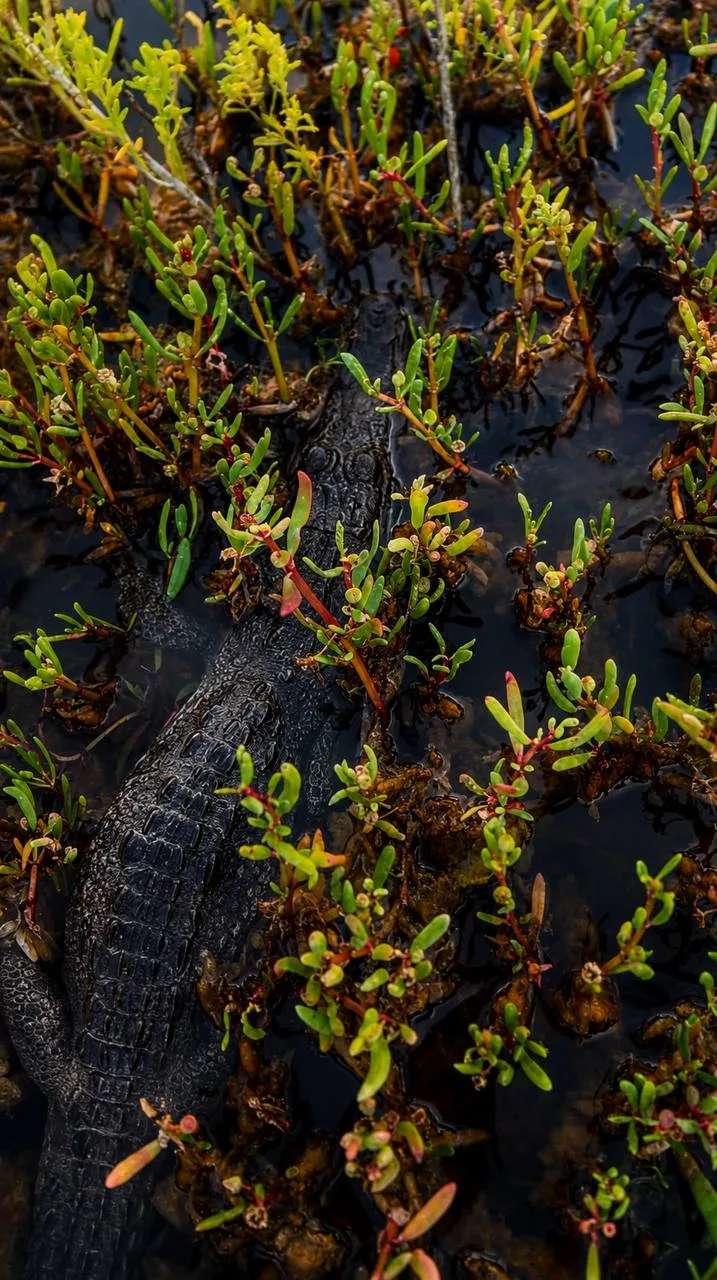
The American crocodile is native to Jamaica and commonly associated with coastal wetlands, mangrove systems, rivers and brackish water. It is also a protected species. That encounter was a sharp reminder that the swamp was not empty or abandoned; it was an active habitat, and we were the visitors in it.
For the group, the moment was both unnerving and educational, reinforcing the importance of moving carefully and respecting wildlife in unfamiliar natural terrain.
Learning About Jamaica’s Mangroves
As we continued through the wetland, the hike became an outdoor classroom.
Jamaica has four recognized mangrove types:
- Red mangrove, typically found nearest the water’s edge, supported by large, arching prop roots
- Black mangrove, usually growing slightly farther inland, identifiable by narrow breathing roots rising from the soil
- White mangrove, generally found on higher ground
- Button mangrove, usually the farthest inland of the four
To a passing observer, a mangrove wetland can look like nothing more than mud and bush. In reality, mangroves are essential to Jamaica’s coastline. They provide nursery habitats for fish, shrimp and crabs, trap sediment, reduce erosion and help buffer the coast against waves and flooding. Walking through this ecosystem at ground level taught the group more than any brochure could.
Reaching the Hellshire Coastline
After negotiating the wetland, we emerged onto open beach, and the transition was dramatic. The enclosed swamp gave way to sea air, open views and firmer ground.
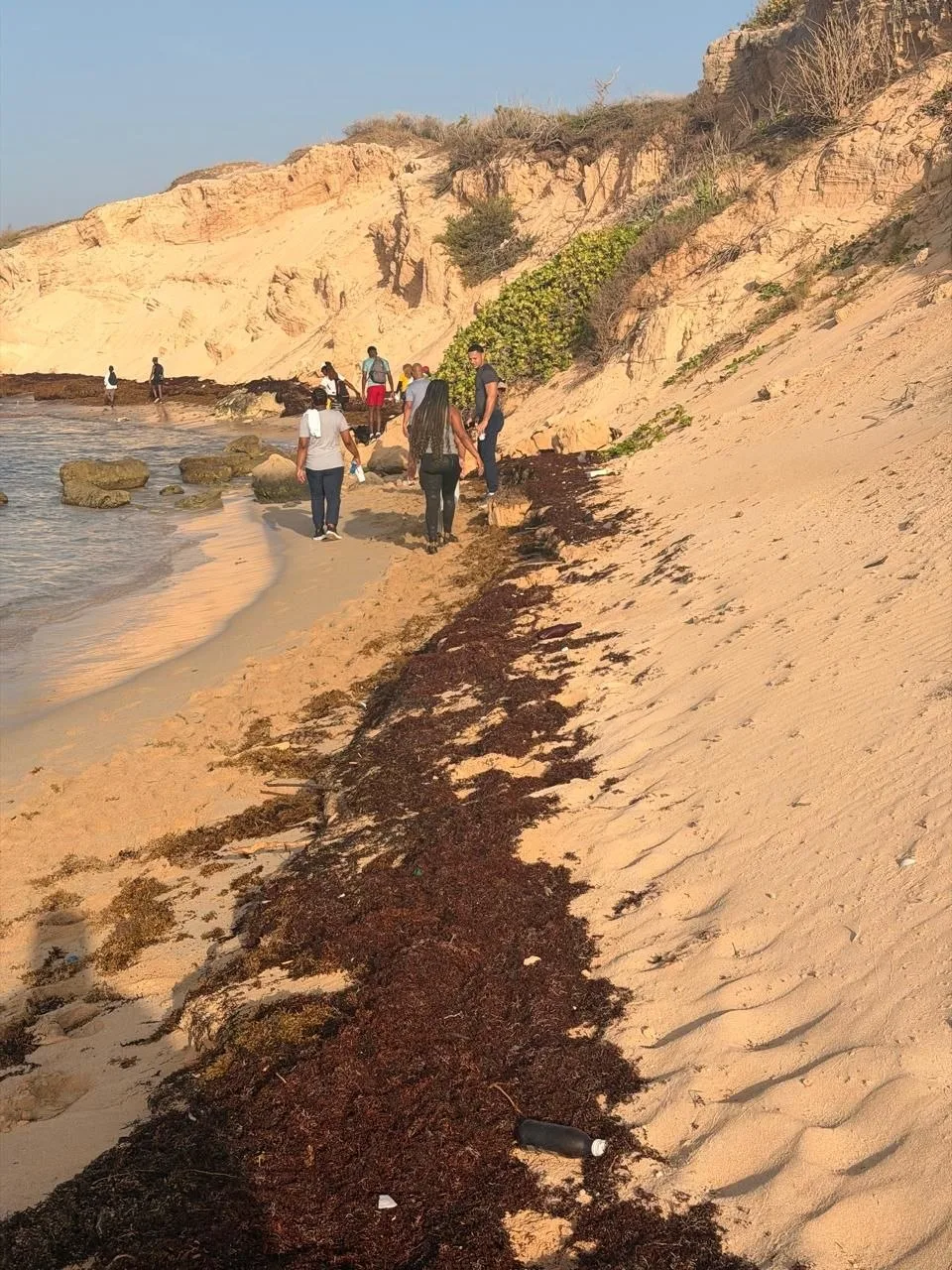
The distance, heat and uneven coastline kept testing the group even as the terrain looked easier.
Along the shore we also encountered Sargassum, the floating brown seaweed that naturally provides food and shelter for marine organisms in the open ocean.
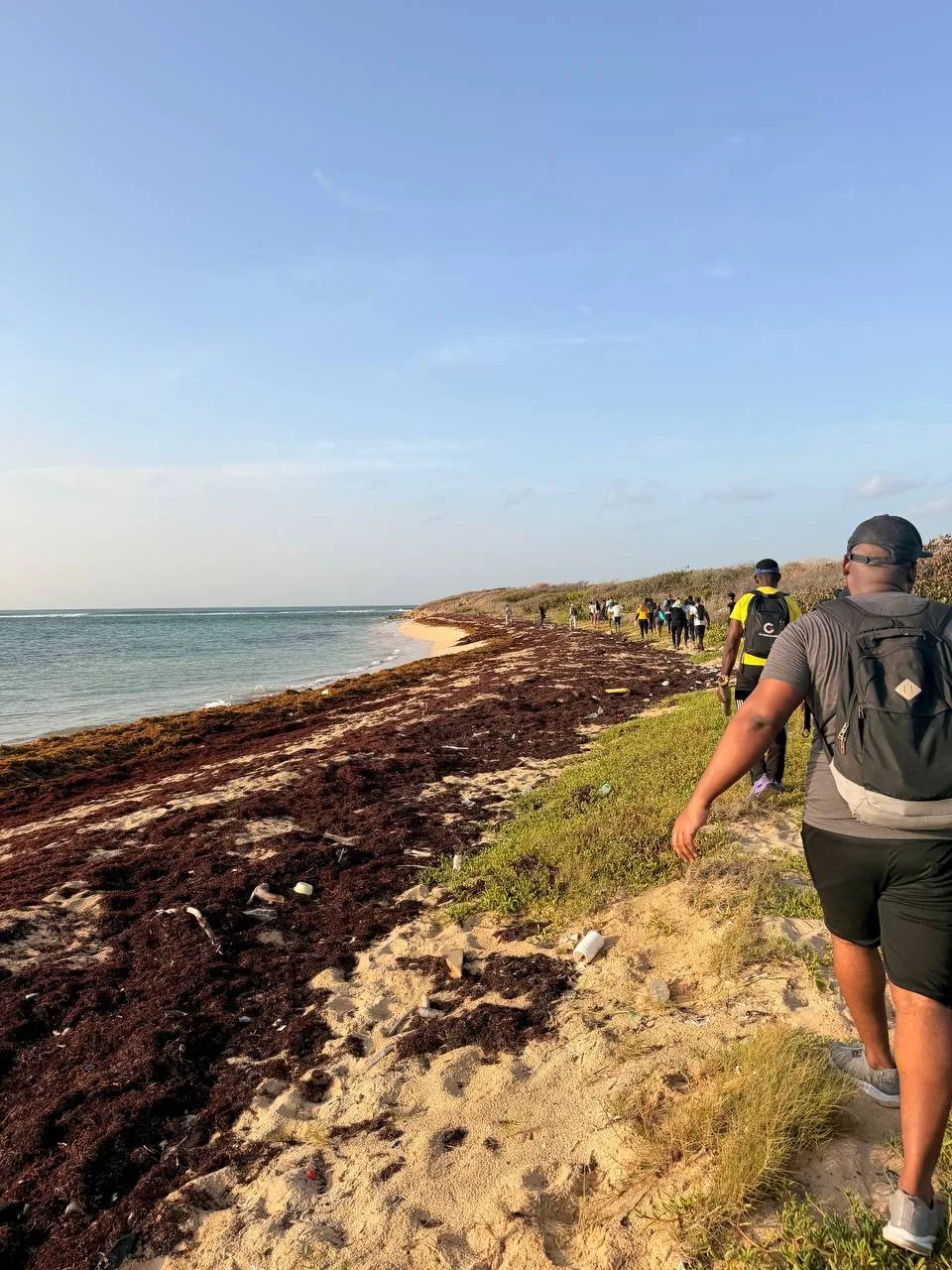
Problems arise when large quantities wash ashore and begin decomposing. The process can release gases that cause unpleasant odors and irritate eyes and airways where accumulations are heavy. It was another small lesson in how marine ecosystems and coastal conditions are connected.
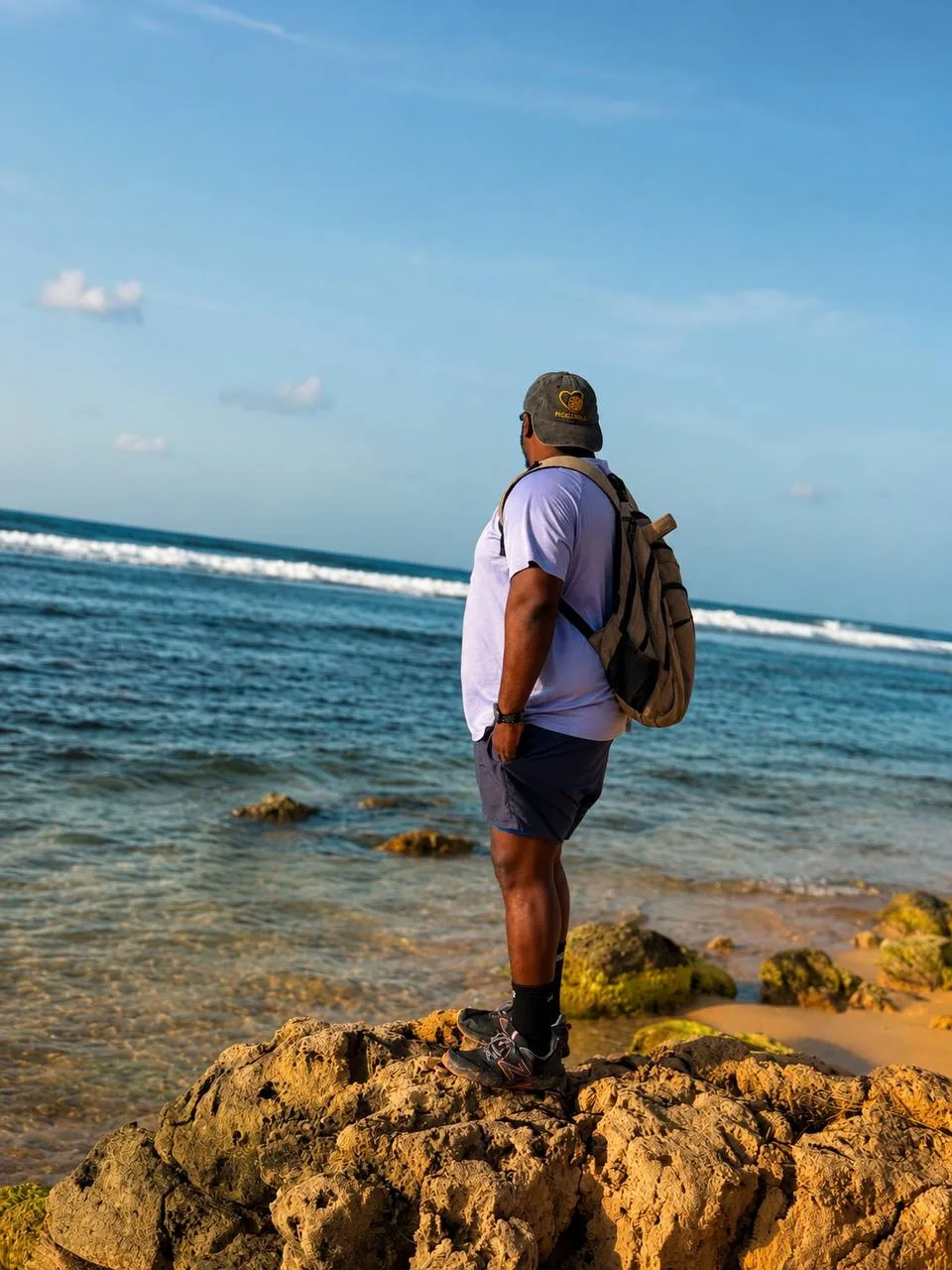
The Old Shrimp Factory
Continuing along the coast, we reached the abandoned structures known locally as the old shrimp factory, weathered buildings standing near the shore, one of the most visually striking points on the route.
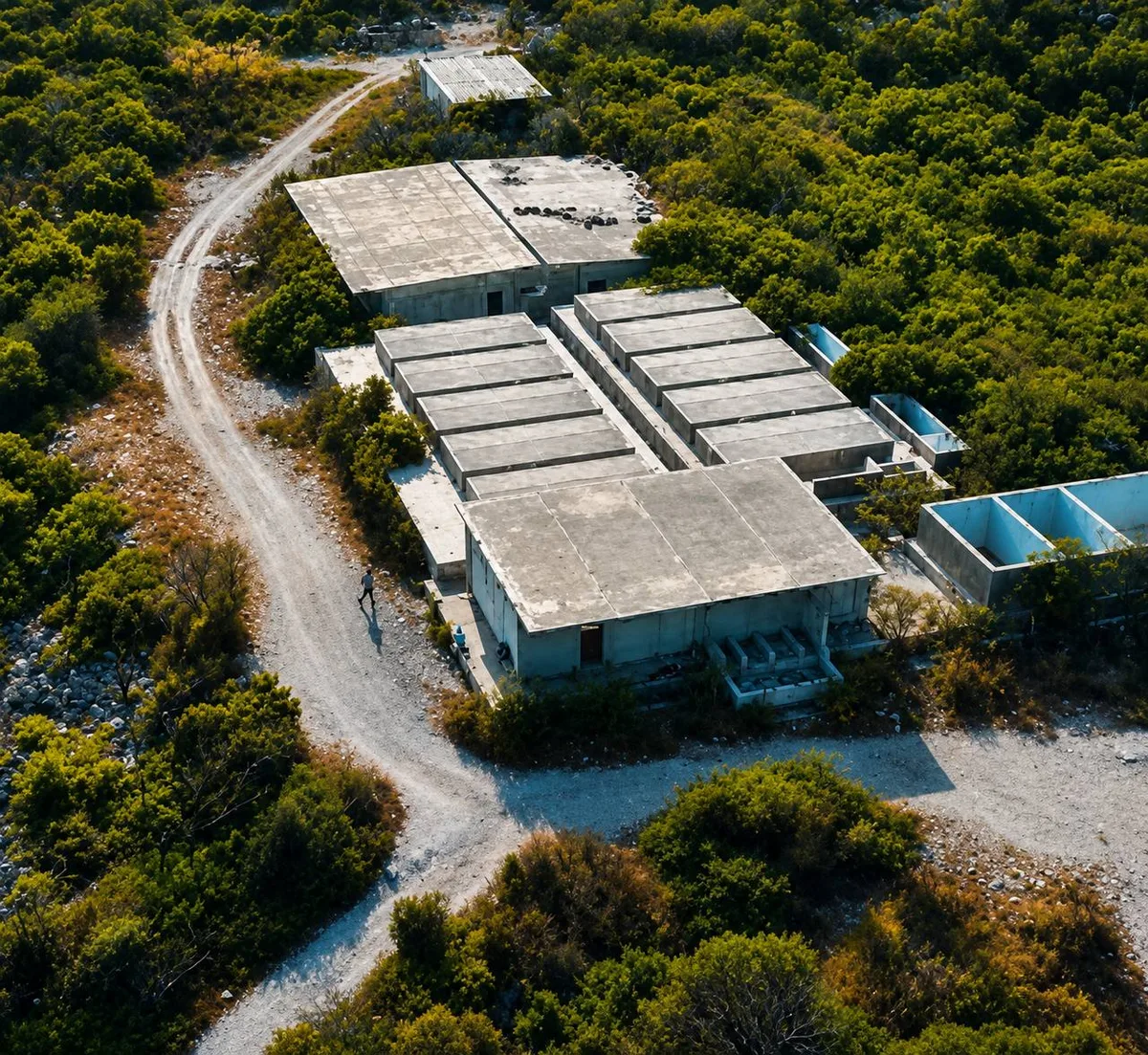
Behind us: mangroves and crocodile habitat. In front of us: the remains of human development slowly being reclaimed by the coastal environment.
While the site is widely known by that name, reliable public information about its original operator, opening date, full purpose or closure is difficult to find. Rather than inventing a history, it is best described honestly as an abandoned coastal complex locally known as the old shrimp factory. That uncertainty is part of what makes the site an interesting stop for responsible exploration and photography, without turning local names into confirmed facts.
The Deeper History of Hellshire
Hellshire is more than a recreational coastline. The National Library of Jamaica records evidence of Taino presence in Hellshire and Spanish haciendas established in the wider area. The difficult limestone terrain, caves, dense vegetation and wetlands shaped how later generations moved through and used this landscape.
The rugged, isolated Hellshire Hills also provided shelter for people who had escaped enslavement. Historical research documents communities living in the hills and resisting colonial authorities during the early nineteenth century. Walking through the mud, mangroves and uneven ground gave our group a clearer sense of why this terrain could offer concealment and protection. The same landscape that challenged us on a recreational hike once held far greater significance for people seeking survival and freedom.
Passing the Two Sisters Cave Area
On the final stretch, we passed the historic Two Sisters Cave area in the Hellshire Hills, a twin limestone cave system containing freshwater sinkholes. A carved Taino face, estimated at roughly 700 years old, has been documented within the cave system.
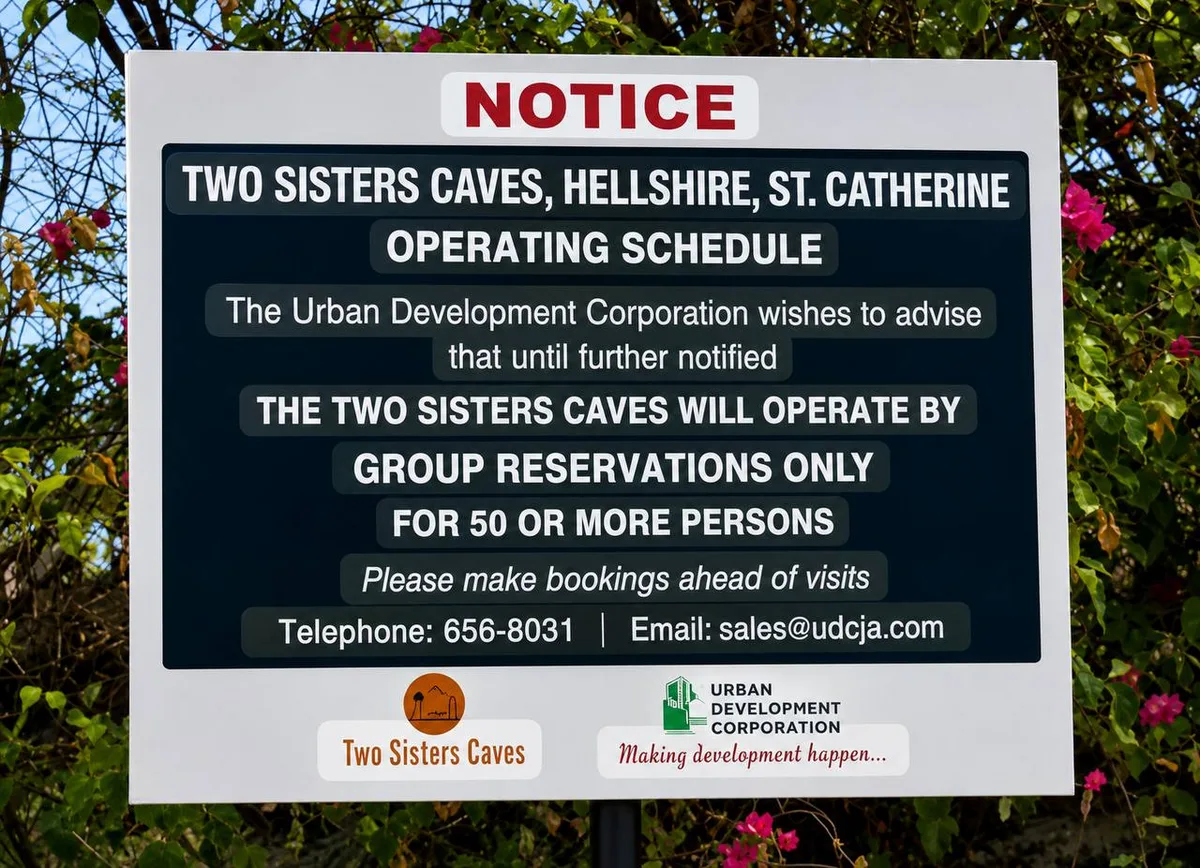
With no evidence of permanent Taino occupation found there, heritage researchers generally conclude the caves were likely used for ceremonial purposes, with the freshwater sinkholes possibly serving as a water source. Two Sisters Cave links modern Portmore directly to Jamaica’s Indigenous history and is a strong example of why this landscape deserves protection.
Access to the cave property has historically been restricted. Lifestyle Hikers does not encourage trespassing or unauthorized entry into protected, private or restricted locations. Our route passed the historic cave area as part of the wider trail, respecting posted boundaries throughout.
A Final Swimming Stop
Near the end of the journey, we found a small swimming hole that quickly became a group favorite. After roughly five miles of mud, pallets, wetlands, coastline and history, the chance to cool off was a welcome, relaxed close to a route that had demanded alertness, endurance and teamwork throughout.
What began as a short Saturday walk had become one of our most memorable Hellshire hiking experiences.
More Than Hiking
The Sand Hills to Hellshire journey captures what Lifestyle Hikers is built around. We do not only count miles. We explore Jamaica’s landscapes, learn the stories connected to them, and build meaningful experiences through movement, nature and community.
This adventure delivered on all three of our core elements:
- Entertainment, an unpredictable journey through pallets, swamps, coastal ruins and an unforgettable crocodile encounter
- Engagement, a shared physical and mental challenge requiring teamwork and full participation from the group
- Education, lessons in mangrove ecology, Jamaican wildlife, Taino heritage, coastal ecosystems and Hellshire’s history
Plan a corporate hiking experience in Jamaica →
Lifestyle Hikers builds outdoor experiences for Jamaicans, visitors, private groups and organizations looking for a deeper connection to the island, including:
- Corporate wellness and team-building activities
- Private group adventures
- Visitor and cultural experiences
- Community wellness programs
- Guided outdoor learning
- Content and destination collaborations
For corporate teams, a hike like this offers a chance to communicate outside the office, work through a shared physical challenge and build relationships away from a boardroom. For visitors, it is a way to experience Jamaica beyond the standard resort circuit. For local hikers, it is a chance to rediscover parts of the island many assume they already know.
Explore Jamaica With Lifestyle Hikers
Jamaica cannot be fully experienced from a vehicle, a hotel or a resort. Some places have to be reached on foot.
Lifestyle Hikers combines outdoor adventure, local knowledge, wellness, community and responsible exploration to create hiking experiences across Jamaica, from Hellshire’s mangroves to trails across the island.
Follow @lifestylehikers on Instagram for photos, videos and trail stories from our latest adventures.
Visit LifestyleHikers.com to see upcoming hikes, private-group options and corporate hiking experiences.
For partnership, tourism, corporate wellness or group inquiries, contact Lifestyle Hikers.
Explore. Climb. Connect. One foot in front of the other.
FAQ: Hiking in Hellshire
Is Hellshire safe for hiking? Hellshire has a range of terrain from moderate coastal walks to challenging wetland crossings. Parts of the trail involve navigating mud, water, and uneven surfaces. Go with a guide or an experienced hiking group like Lifestyle Hikers. Do not attempt unfamiliar routes alone.
Are there really crocodiles in Hellshire? Yes. The American crocodile (Crocodylus acutus) is native to Jamaica and commonly found in Hellshire’s mangrove wetlands, rivers, and brackish water systems. They are a protected species and generally avoid humans. Give them space if you encounter one.
Can you visit Two Sisters Cave? Two Sisters Cave is a heritage site in the Hellshire Hills containing Taino artefacts and freshwater sinkholes. Access has been restricted at various times. Visitors should not enter without permission. Lifestyle Hikers passed the area as part of a wider route and did not enter the property.
How long is the Hellshire Sand Hills to Two Sisters Cave hike? This route was approximately five miles and took our group several hours, including stops. Terrain includes swamp, coastline, and uneven ground. Pace depends on group size and conditions.
How do I join a Lifestyle Hikers hike? Visit LifestyleHikers.com or follow @lifestylehikers on Instagram for upcoming hike announcements and registration details.